
Coconuts are one of the most beloved fruits around the world, known not only for their distinct taste and refreshing coconut water but also for their wide array of uses in culinary, cosmetic, and even medicinal applications. Despite their popularity, one common question that often comes up is, “Do coconuts have seeds?” Many people may assume that coconuts are simply a type of nut, but in reality, coconuts are much more complex and intriguing than they might first appear.
In this article, we will delve into the science behind coconuts, answer the question of whether they contain seeds, explore their growth process, and provide a deeper understanding of how coconuts fit into the ecosystem. We will also take a brief detour into the world of custom branded coconuts, showing how businesses have been using coconuts creatively for marketing and special events.
What is a Coconut?
Before we dive into whether coconuts have seeds, it’s important to understand what a coconut is in the first place. While commonly referred to as a “nut,” the coconut is technically classified as a drupe. A drupe is a type of fruit that has three distinct layers: the outer skin (exocarp), a fleshy middle layer (mesocarp), and an inner hard shell (endocarp) that encases the seed. This is the structure of a coconut, and it’s these three layers that make it a unique fruit in the botanical world.

coconut-anatomy-cross-section-labeled
- Exocarp (Outer Skin): This is the outermost layer of the coconut, which is smooth and green when immature and turns brown and fibrous as the coconut matures.
- Mesocarp (Fibrous Husk): Often referred to as the husk, this is the fibrous layer between the outer skin and the hard inner shell. It serves as protection for the seed and aids in seed dispersal by water.
- Endocarp (Hard Shell): This is the hard, woody shell that protects the seed inside. It’s tough enough to withstand the forces of nature, including the saltwater of the ocean.
- Seed (Coconut Seed): The seed itself, located inside the hard shell, is what we commonly associate with the “nut.” This seed contains everything the young coconut tree needs to start growing once it finds suitable conditions.
Do Coconuts Have Seeds?
Now, let’s answer the burning question: Do coconuts have seeds?
Yes, coconuts do have seeds. In fact, the coconut “seed” is technically the entire inner part of the coconut that is encased in the hard shell. This seed is crucial for the coconut tree’s reproduction. The coconut seed, or “nut,” is capable of germinating into a new tree, given the right conditions such as the presence of water, sunlight, and fertile soil.
Botanical Explanation of the Coconut Seed
From a botanical standpoint, the coconut seed is part of the fruit known as a drupe, and its seed is protected by multiple layers. Unlike some fruits where the seed is contained in the flesh (like an apple or a peach), the coconut’s seed is surrounded by a tough, fibrous husk, a hard shell, and often, a significant amount of coconut water. The seed is actually the white, solid portion of the coconut that we recognize as the “meat.”
- Coconut Water: While technically not part of the seed itself, the water inside the coconut’s endocarp (the hard shell) is a vital part of the seed’s germination process. It helps keep the seed hydrated as it begins to sprout, providing the ideal environment for growth.
- Coconut Meat: This is the white, fleshy interior that lines the seed, providing nutrients and a protective layer. This portion of the coconut is edible and can be eaten fresh, dried, or processed into coconut oil and milk.
Seed Dispersal Mechanism:
One of the most fascinating aspects of coconuts is their unique method of seed dispersal. Unlike most plants that rely on animals or wind to spread their seeds, coconuts have evolved to be dispersed by water. The coconut’s fibrous husk is specifically designed to float on water, allowing the seed to travel great distances across oceans. This is why coconut trees are often found growing along tropical coastlines, as the seeds can be carried by the ocean currents to new areas.
The coconut’s ability to travel by water has allowed it to colonize remote islands and coastal regions worldwide. The fibrous husk helps protect the seed from the salty ocean water and impacts from potential obstacles in its journey. Once the seed finds its way to a suitable beach, it begins the germination process, taking root in the sandy soil.
Germination Process:
Once a coconut seed has reached a suitable location, such as a tropical beach, and is in contact with water and soil, it begins to germinate. The outer shell of the coconut will eventually crack, and the seedling will begin to sprout. It’s a slow process, taking anywhere from several months to a year for the coconut to fully germinate and begin growing into a coconut tree.
Once it starts to grow, the young coconut tree will send out roots to anchor itself in the soil, and a shoot will emerge from the seed to form the first leaves. Over the years, the tree will continue to grow, producing more coconuts that contain new seeds.
Nutritional Benefits of Coconuts
Now that we’ve addressed whether coconuts have seeds, it’s important to recognize just how valuable coconuts are as a whole, not just as a seed-bearing fruit.
Coconuts provide an array of nutritional benefits and have been a staple in tropical diets for centuries. The seed itself, along with the water and meat, is a powerhouse of nutrients.
- Coconut Water: Rich in electrolytes such as potassium, magnesium, and sodium, coconut water is known for its hydrating properties. It’s often used as a natural alternative to sports drinks, making it ideal for rehydration.
- Coconut Meat: The solid, white interior of the coconut is rich in healthy fats, fiber, and essential nutrients such as manganese, copper, and iron. The meat is a great source of energy and can be enjoyed raw, dried, or used in various recipes.
- Coconut Oil: Extracted from the meat, coconut oil has become famous for its health benefits. It contains medium-chain triglycerides (MCTs) that are easily digestible and can support energy levels, brain function, and metabolism.
Not only are coconuts packed with nutrients, but they also play a key role in supporting immune function, aiding in digestion, and providing antioxidants. The versatility of coconuts—whether in the form of coconut water, meat, or oil—has made them a popular choice for health-conscious individuals worldwide.
Are All Coconuts the Same?
While coconuts might appear to be the same at first glance, there are different varieties of coconuts that serve various purposes.
Different Varieties of Coconuts:
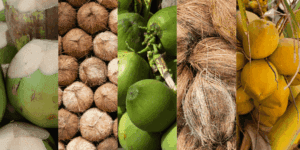
different types of coconuts
There are two main types of coconuts: tall coconuts and dwarf coconuts.
- Tall Coconuts: These are the more common variety, typically growing up to 30 meters in height. They are often used for their water and meat, which is harvested after the fruit ripens.
- Dwarf Coconuts: Dwarf coconuts grow to smaller heights, typically between 6 to 8 meters. They tend to produce smaller fruits and are more commonly used in breeding programs and for ornamental purposes.
While both varieties are used for food and water, the specific uses of the coconut often depend on its size, flavor, and ripeness.
Custom Branded Coconuts:
In addition to their numerous culinary and health uses, coconuts are also making a mark in the branding world. Custom branded coconuts are a unique and creative way for businesses to engage with their customers and make a memorable impression.
Imagine attending a wedding, corporate event, or festival where every guest is handed a coconut with a custom logo or message printed on it. Whether it’s for a tropical-themed party, a summer festival, or a corporate event, custom branded coconuts offer a fun and refreshing way to stand out and make the event even more special.
Businesses like Coconut Stock offer custom branded coconuts that are perfect for events, allowing companies to add a personalized touch to their marketing materials. From weddings to corporate retreats, branded coconuts can serve as the ultimate conversation starter and a unique takeaway for guests.
How Do Coconuts Grow?
Understanding how coconuts grow is essential to appreciating their uniqueness. Coconut trees thrive in tropical environments with warm temperatures, plenty of sunlight, and access to saltwater. These trees are known for their resilience and ability to survive in harsh coastal conditions, making them ideal for sandy beaches.
The growth process starts with the germination of the coconut seed, which requires water and fertile soil. Once the tree is established, it will continue to grow, producing more coconuts as it matures. Coconut trees typically begin to bear fruit after 5 to 6 years, with mature trees producing up to 75 coconuts per year.
Fun Facts About Coconuts
Coconuts are more than just a tasty treat or a versatile ingredient—they’re also quite fascinating! Here are a few fun facts about coconuts:
- World’s Largest Producer: India is the largest producer of coconuts in the world, followed by Indonesia and the Philippines.
- Multi-Use Fruit: Every part of the coconut can be used in some way, from the water and meat to the husk and shell.
- Natural Air Conditioners: The coconut tree is sometimes referred to as a “natural air conditioner” because it can cool the air around it due to the moisture in its leaves.
Conclusion
In conclusion, coconuts are much more than just a tropical treat—they’re a vital part of the ecosystem, capable of germinating into a new tree and serving a wide range of purposes for humans. Yes, coconuts do contain seeds, and these seeds are the starting point for the growth of a new coconut tree. From their ability to float across oceans to their impressive nutritional benefits, coconuts are truly a wonder of nature.
If you’re looking to add a tropical flair to your next event, consider custom branded coconuts from Coconut Stock. Whether it’s for a wedding, corporate event, or any celebration, custom coconuts are a unique way to leave a lasting impression and refresh your guests with something special.
FAQs on Do Coconuts Have Seeds
1. Do all coconuts have seeds?
Yes, all coconuts contain seeds. The seed is the “nut” inside the coconut, encased in the hard shell. It contains the embryo of the coconut tree and is capable of germinating when the right conditions are met.
2. How do coconuts disperse their seeds?
Coconuts are unique in that they are dispersed by water. The fibrous husk of the coconut allows it to float on water, and this helps the coconut travel across oceans to find new locations where it can germinate and grow into a new tree.
3. What is the nutritional value of coconut meat?
Coconut meat is highly nutritious. It’s rich in healthy fats, fiber, and essential nutrients like manganese, copper, and iron. It provides energy and is commonly used in cooking, baking, and making coconut milk and coconut oil.
4. Can a coconut seed grow into a tree in any environment?
Coconut seeds require a tropical or subtropical climate to grow. They need warm temperatures, plenty of sunlight, and access to water. The seed germinates when it is in contact with fertile soil and the right conditions for growth.
5. How can I use custom branded coconuts for events?
Custom branded coconuts can be used at events like weddings, corporate functions, and festivals. Businesses can have their logos or messages printed on the coconuts, creating a fun and unique branding tool that guests will remember. Coconut Stock offers custom branded coconuts for any occasion, helping to make your event stand out.

