
People in tropical countries have consumed coconut water for centuries to treat dehydration, fatigue, and heatstroke—long before modern sports drinks existed.
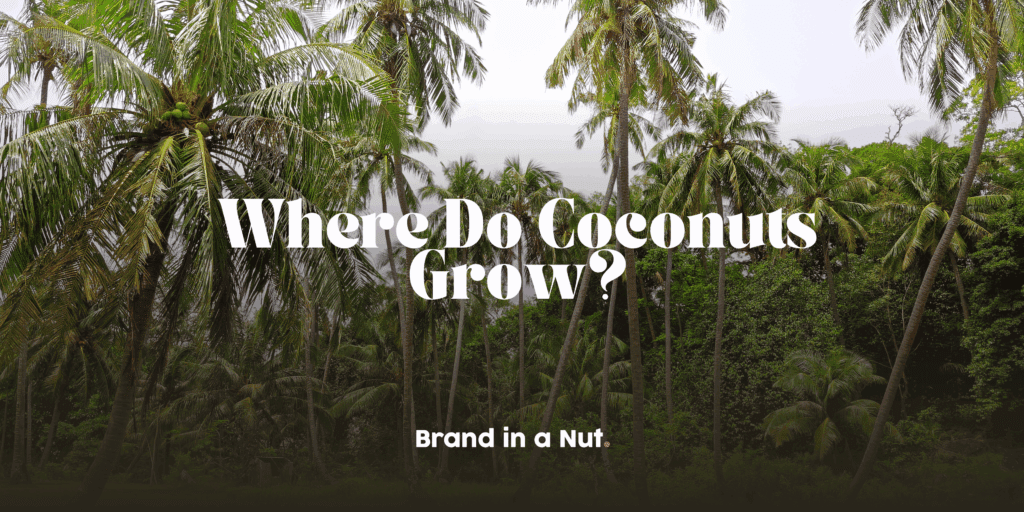
Few fruits evoke the feeling of paradise quite like a coconut. Whether it’s being sipped fresh on a sunny beach or served chilled at a tropical resort, coconuts are symbols of relaxation, vitality, and natural luxury. The refreshing taste of coconut water, the soft jelly-like meat, and even the rustic charm of the shell connect people worldwide to tropical living.
Yet, beyond the sunny imagery lies a fascinating question: where do coconuts actually grow?
Coconuts don’t thrive everywhere – they are children of the tropics. Their natural environment must balance sunlight, humidity, ocean air, and nutrient-rich soil. Understanding where coconuts grow means understanding how nature carefully designed this fruit to flourish only under the warm embrace of coastal climates.
And among all coconut varieties, green young coconuts – the fresh, water-filled stage of the fruit – represent the purest expression of tropical life.
The Ideal Climate for Coconut Growth
Coconuts are tropical through and through. They need warmth, sunlight, and moisture all year long. Unlike temperate crops that hibernate in winter, coconut palms grow continuously in regions that never see frost.
The Perfect Environment
Coconut palms flourish in areas:
- Within 25° north and south of the equator, where days and nights are almost equal.
- With average temperatures between 70°F and 95°F (21°C–35°C).
- That receive 30–50 inches (750–1,250 mm) of rain annually.
- With high humidity (above 70%) for steady moisture absorption.
- Offering well-drained sandy or loamy soil, often near the coast.
They also require plenty of sunlight – around 2,000 hours a year – to maintain energy for fruiting.
Why the Coast Matters
Coconut palms love the coast because they are naturally salt-tolerant. Their roots are adapted to absorb minerals from sandy, salty soils that would kill most plants. The coastal breeze helps distribute pollen, while the proximity to the ocean ensures consistent humidity.
This is why you’ll find endless rows of palms along tropical beaches – not just because they look beautiful, but because nature made them thrive there.
Green Coconuts and Climate
For green young coconuts, the perfect climate directly affects their flavor. The balance of rainfall, sunlight, and sea minerals enhances sweetness and enriches the water with electrolytes. That’s why green coconuts from Thailand, the Philippines, or Costa Rica often taste different – their water reflects the unique chemistry of the soil and sea around them.
How Coconuts Grow: From Palm to Fruit
The coconut palm (Cocos nucifera) is one of nature’s most resourceful creations – a plant that provides food, water, shelter, and fuel. But its life cycle is just as fascinating as its versatility.
The Life Cycle of a Coconut Palm

Life Cycle of a Coconut Palm
- Seed Stage: A single coconut – the seed itself – falls to the ground or drifts ashore.
- Germination: The outer shell protects the sprouting embryo. Once rooted, the palm begins its slow rise.
- Growth Phase: It takes around 6–10 years for a palm to reach maturity and start producing coconuts.
- Fruiting Stage: Each tree can yield 50–100 coconuts per year, depending on conditions.
- Longevity: A healthy palm can live up to 80–100 years, providing coconuts year-round.
Green vs. Brown Coconuts
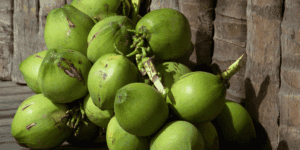
- Green coconuts: Harvested around 6–8 months after flowering, when they’re filled with water and soft, jelly-like flesh.
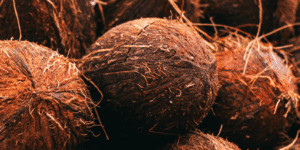
- Brown coconuts: Harvested after 12 months, when the water reduces and the meat hardens into the white kernel used for oil and cooking.
Each stage serves a purpose – the young coconut nourishes hydration and health, while the mature coconut sustains industry and trade.
Top Coconut-Growing Regions Around the World
Coconuts are found in almost every tropical region on Earth. Their global spread is due to both human cultivation and nature’s own distribution – the fruit’s buoyant husk allows it to float across oceans and germinate wherever it lands.
Let’s explore the major regions where coconuts thrive and how each has shaped its own coconut culture.
a. Southeast Asia: The Heart of Coconut Production
Southeast Asia accounts for over 80% of the world’s coconuts.
- The Philippines: Often called “The Tree of Life”, the coconut is used in every form – from oil and water to coir fiber and shell crafts. Filipino green coconuts are known for their light, naturally sweet water.
- Indonesia: The world’s top producer, with millions of hectares dedicated to coconut farming. The climate ensures continuous fruiting throughout the year.
- Thailand: Famous for the Nam Hom (“fragrant water”) variety – soft, aromatic coconuts with delicate sweetness, often exported globally.
b. South Asia: A Blend of Culture and Agriculture
In India and Sri Lanka, coconuts are not just crops – they’re cultural icons.
- In India’s coastal states like Kerala, Tamil Nadu, and Goa, green coconuts are a daily refreshment.
- In Sri Lanka, the King Coconut – a bright orange variety – is grown specifically for drinking water and health remedies.
c. The Pacific Islands and Oceania
These islands are the coconut’s ancestral home.
- Fiji, Samoa, and Hawaii have natural coastal coconut belts.
- Coconuts are central to Polynesian identity and cuisine.
- Hawaii, in particular, has a thriving market for fresh green coconuts at beach resorts and wellness retreats.
d. The Caribbean and Latin America
The Caribbean’s coconuts are as iconic as its turquoise waters.
- In Jamaica, Puerto Rico, and the Dominican Republic, coconuts are enjoyed straight from the shell at beaches and markets.
- Mexico and Costa Rica grow coconuts along their Pacific and Caribbean coasts, exporting both young coconuts and coconut water.
e. Africa’s Coastal Regions
Emerging coconut zones are developing in Tanzania, Ghana, Mozambique, and Nigeria.
These countries’ warm, humid coasts provide excellent conditions for sustainable coconut farming, with a growing focus on green coconut exports and processing industries.
Why Coconuts Love Coastal Areas
Coconuts are natural travelers. Their seeds are among the few capable of crossing entire oceans without human help.
The coconut fruit has a fibrous husk that allows it to float on seawater for weeks or months. Once it reaches a sandy shore with enough moisture, it germinates and grows into a new palm. This is why coconuts are found on nearly every tropical island – from the Indian Ocean to the Caribbean.
Their salt tolerance also plays a role. The roots of a coconut palm can extract fresh water from salty soil, a rare biological trait that allows them to survive close to the ocean. Combined with their deep anchoring root system and wind-resistant trunks, they are built to thrive where most plants would fail.
In short, the coast isn’t just a scenic backdrop for coconuts – it’s their natural habitat and evolutionary home.
Harvesting and Uses of Green Coconuts
Green coconuts are harvested before they mature, typically between six to eight months after flowering. At this point, they’re heavy with water and have soft, jelly-like meat.
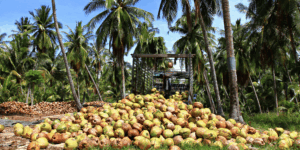
The Art of Harvesting
- Farmers climb tall palms (often up to 100 feet) using ropes or ladders.
- In some regions, trained monkeys or pole-cutting techniques are used to collect the fruit.
- Skilled harvesters select coconuts based on the sound of the slosh inside and the color of the husk.
After Harvest
The green coconuts are:
- Trimmed and husked.
- Chilled for freshness.
- Sold locally or exported to markets around the world.
Everyday Uses
- Coconut water: A natural electrolyte drink, rich in potassium and hydration minerals.
- Coconut meat (malai): Soft, spoonable flesh used in smoothies, desserts, and skincare.
- Shell and husk: Repurposed for eco-friendly bowls, plant pots, and handicrafts.
Nothing goes to waste – the leaves, trunk, and even coconut coir (fiber) have value. It’s the perfect model for sustainable agriculture.
Nutritional and Environmental Value
Green coconuts aren’t just delicious – they’re scientifically beneficial.
Nutritional Profile
- Electrolytes: Potassium, magnesium, sodium, and calcium help balance hydration.
- Antioxidants: Combat free radicals and support cellular repair.
- Low Calories: Around 45–60 calories per 100 ml, making it ideal for healthy hydration.
- Digestive Enzymes: Naturally support gut health and metabolism.
Sustainability Factor
- Coconut palms produce fruit all year long.
- They require no artificial irrigation in coastal climates.
- Every part of the tree is reusable – from leaves to shells.
- Coconut water is packaged and consumed sustainably, often replacing plastic bottles.
It’s one of the few agricultural products that’s both eco-friendly and nutritionally powerful.
Conclusion: Bringing the Tropics to Every Occasion
Coconuts grow where the sun shines brightest, the air stays warm, and the ocean whispers nearby. From the islands of the Pacific to the beaches of the Caribbean, their journey tells a timeless story – one of endurance, adaptability, and natural beauty.
Every green coconut you hold is a living connection to those tropical origins. It carries the minerals of the sea, the sweetness of the rain, and the warmth of the equatorial sun.
And today, this tropical essence travels far beyond the islands. From wellness cafés to luxurious events, coconuts have become symbols of health, sustainability, and celebration. Even when served beautifully – perhaps custom branded coconuts for a special occasion – they continue to share the same spirit that began under the palm trees by the sea.
FAQ’s About Where Do Coconuts Grow
Do coconuts grow on palm trees?
Yes. Coconuts grow on the coconut palm tree (Cocos nucifera), which is a type of palm tree found in tropical and subtropical climates.
Where is coconut mostly grown?
Coconuts are mostly grown in Southeast Asia, especially in Indonesia, the Philippines, and India. These countries produce the majority of the world’s coconuts due to their ideal tropical weather.
Is coconut water drinkable?
Yes. Coconut water from young, green coconuts is completely drinkable, naturally sterile, and rich in electrolytes — making it a refreshing and healthy beverage.
Which US state has the most coconuts?
Hawaii has the most coconuts because of its year-round tropical climate, but South Florida also has a large population of wild and ornamental coconut palms.
Are coconuts healthy to eat?
Yes. Coconuts are full of healthy fats, fiber, and minerals. Coconut water hydrates the body, while the flesh provides nutrients like manganese, potassium, and iron.

