

Coconuts are one of nature’s most iconic symbols of the tropics — picture a sandy beach, waves crashing in the background, and a refreshing coconut in your hand. But have you ever wondered where that coconut really comes from? Do coconuts actually grow on palm trees, or is that just something we’ve always assumed? And are coconuts really nuts, as their name suggests?
This guide explores the science, myths, and fascinating facts behind coconuts — from how they grow to why they’ve become a global symbol of tropical living, sustainability, and even event luxury.
Understanding the Coconut Tree
Let’s start with a simple but surprising truth — yes, coconuts do grow on palm trees, but not just any palm tree. The coconut comes from a very specific type known as the coconut palm, scientifically called Cocos nucifera.
This tree belongs to the Arecaceae family — the same family that includes date palms and oil palms. However, not all palm trees produce coconuts. Out of more than 2,600 palm species in the world, only one bears the coconut fruit — the coconut palm.
The coconut palm is distinct for its tall, slender trunk, which can reach heights of up to 80–100 feet, and its feather-like leaves that fan out at the top. These trees thrive in tropical climates, where warmth, sunlight, and salty air help them flourish. The sight of coconuts dangling high above the ground, swaying gently in the breeze, is a hallmark of coastal paradise — and a reminder of nature’s simplicity and abundance.
How and Where Coconuts Grow

Coconuts love the sun. They grow best in humid, tropical environments where temperatures remain between 70°F and 90°F (21°C–32°C). While they can tolerate salty soil and sea spray, they need well-drained sandy soil and plenty of water to thrive.
A coconut palm typically begins to bear fruit around 6 to 10 years of age, and once mature, it can produce 30 to 75 coconuts each year. The fruits grow in clusters near the top of the tree, protected by large, green fronds.
Each coconut starts as a small flower that, when pollinated, develops into a green fruit with a fibrous outer layer called the husk. Inside the husk lies the hard shell we all recognize, which encloses the white, edible meat and refreshing coconut water.
Harvesting coconuts is no easy task — traditional farmers often climb these tall palms barefoot or use trained animals or long poles. In commercial production, coconuts are collected every 45–60 days to ensure a continuous supply of fresh fruit.
Are Coconuts Really Nuts?
Here’s where things get interesting — coconuts aren’t actually nuts at all.
Botanically speaking, coconuts are classified as drupes, or more precisely, fibrous one-seeded drupes. A drupe is a type of fruit with three layers:
- Exocarp: the outer skin (the green or brown shell you see on a fresh coconut),
- Mesocarp: the fibrous husk beneath the skin,
- Endocarp: the hard inner shell that protects the seed — which contains the coconut water and white meat.
Other examples of drupes include peaches, cherries, and olives. The coconut is simply a tropical variation of this fruit type, with each layer playing a role in protecting and nourishing the seed inside.
So why do we call it a “nut”? The word coconut comes from the Portuguese and Spanish word “coco”, meaning “head” or “skull,” inspired by the three eye-like holes on one end of the shell. When English speakers encountered the fruit, they added “nut” because of its hard shell — and the term stuck ever since.
To sum it up:
- Botanically: A coconut is a fruit (specifically a drupe).
- Culinarily: It’s used like a nut, seed, and fruit all in one.
- Culturally: It’s the symbol of the tropics — and for good reason.
Curious to learn more about what truly makes coconuts unique? Dive deeper into the science and symbolism in our full guide: Are Coconuts Nuts?
The Life Cycle of a Coconut Palm
The growth of a coconut palm is a beautiful process — and one that mirrors resilience and balance in nature.
- Germination: A mature coconut that falls from the tree may sprout on the ground. The soft inner seed inside starts to grow, sending roots downward and a shoot upward.
- Seedling Stage: Within a few months, a small palm begins to form, establishing its first leaves.
- Juvenile Stage: The palm develops a stronger trunk and canopy but doesn’t produce fruit yet.
- Maturity: After about 6–10 years, it begins flowering and fruiting.
- Full Production: A healthy tree can continue producing coconuts for up to 80–100 years.
Each coconut palm is a self-sustaining ecosystem. Its long leaves provide shade, its trunk serves as lumber, and its fruits offer nourishment and hydration. It’s no wonder it’s often called the “Tree of Life.”
The Versatility of the Coconut
Coconuts are one of the world’s most multi-purpose natural resources. Every part of the fruit — and even the tree — has a use:
- Coconut Water: A natural electrolyte-rich drink that hydrates and refreshes.
- Coconut Meat: Used for oil, milk, and culinary delights across the world.
- Coconut Shells: Transformed into bowls, charcoal, and eco-friendly craft materials.
- Coconut Husks: Processed into coir fibers for ropes, mats, and soil conditioners.
- Coconut Leaves: Woven into baskets or used as roofing materials in traditional homes.
This versatility has made coconuts a vital part of economies, diets, and cultures — from tropical farmers to global consumers.
But in recent years, coconuts have gone beyond kitchens and beaches — becoming part of sustainable luxury experiences at weddings, festivals, and corporate events.
Coconuts Beyond the Tropics: A Modern Icon
Once a symbol of island life, coconuts have now become a global lifestyle statement. They appear in skincare, nutrition, décor, and most recently — in the world of branded experiences.
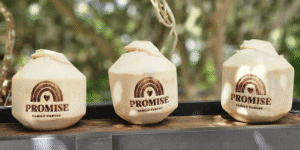
Event planners and luxury venues are now embracing custom branded coconuts to serve drinks at weddings, corporate launches, hotel openings, and festivals. It’s a creative blend of nature and branding — refreshing guests while showcasing a company’s identity in a memorable, sustainable way.
As Coconut Stock, we have taken this concept to the next level. Our fresh young Thai coconuts, elegantly diamond-shaped and branded with custom logos, turn ordinary refreshments into premium event statements. Guests get to sip naturally sweet coconut water from a shell that carries a story, your story.
It’s proof that something as natural as a coconut can also become a symbol of artistry, sustainability, and brand creativity.
Fun Coconut Facts You Didn’t Know
- Coconuts can travel the world. Thanks to their buoyant husks, coconuts can float across oceans and sprout on distant shores, which explains why they’re found on so many islands.
- The coconut water is sterile inside a closed shell, making it one of nature’s purest drinks.
- Coconut palms bend but rarely break. Their flexible trunks help them survive hurricanes and high winds.
- The name “Tree of Life” comes from the fact that nearly every part of the coconut palm serves a purpose — from food and shelter to medicine and decoration.
- Not all palm trees produce coconuts. Only Cocos nucifera gives us the fruit we know and love.
Coconut Trees and Sustainability
Coconut palms don’t just provide delicious fruit — they’re an example of sustainable, zero-waste agriculture.
Unlike many commercial crops, coconuts grow with minimal pesticide use and can thrive in poor, sandy soils where few other crops survive. Their deep roots help prevent coastal erosion, and their fallen leaves naturally enrich the soil.
The shells and husks are biodegradable, and every part of the coconut can be reused or repurposed — making them an eco-conscious choice for consumers and businesses alike.
That’s why many modern event planners are shifting toward eco-friendly serving options, like natural coconut shells, instead of plastic cups or bottles. It’s both aesthetic and responsible — a perfect reflection of the planet-first mindset shaping today’s hospitality industry.
Do All Palm Trees Grow Coconuts?
Not all palm trees produce coconuts — and this is one of the biggest misconceptions people have. The coconut palm (Cocos nucifera) is unique among palms because of its ability to produce the fruit.
Other palms, like the date palm (Phoenix dactylifera) or oil palm (Elaeis guineensis), produce completely different fruits. The coconut palm thrives primarily in coastal and tropical regions, where it can benefit from sandy soil and salty sea air.
If you spot a palm tree on a city street or in a hotel courtyard, it might not be a coconut-bearing one — but the resemblance often confuses people. The easiest way to tell is by looking for coconuts hanging near the top in clusters. No coconuts? Then it’s likely just a decorative palm variety.
Why We Love Coconuts: A Blend of Nature and Culture
Beyond their physical uses, coconuts carry deep cultural and symbolic meanings. In many cultures, they represent purity, hospitality, and life itself. Breaking a coconut is often seen as a gesture of good luck or new beginnings.
From beach weddings to tropical cocktails, coconuts symbolize relaxation, connection, and simplicity — everything people crave in today’s busy world.
For event planners, brands, and hotels, incorporating coconuts adds a touch of natural authenticity to the experience — merging tropical beauty with cultural depth.
Conclusion: So, Do Coconuts Grow on Palm Trees?
Yes — coconuts absolutely grow on palm trees, but not just any palm. They grow on the coconut palm, a species that has nourished civilizations, inspired cultures, and even shaped modern sustainable branding.
And no, coconuts aren’t nuts — they’re one-seeded drupes, a beautiful reminder that nature doesn’t always fit neatly into human labels.
From tropical shores to luxury events, coconuts have come a long way. They connect us to nature’s simplicity, promote sustainability, and even help brands tell their story in a creative, organic way.
So the next time you enjoy coconut water — whether straight from the shell or through a custom branded coconut at an event — remember the journey behind it: a seed that crossed oceans, grew under the sun, and became the symbol of tropical elegance and sustainability.
FAQs
- Do all palm trees grow coconuts?
No, only the coconut palm (Cocos nucifera) produces coconuts. Other palm species, like date palms and oil palms, grow different fruits.
- How long does it take for a coconut palm to bear fruit?
Typically, a coconut tree begins producing fruit between 6 and 10 years of age and can continue for up to a century.
- Are coconuts sustainable?
Yes. Coconut palms grow with minimal environmental impact and almost every part of the tree can be used, making it a highly sustainable crop.
- Can coconuts grow in non-tropical climates?
They require consistent warmth and sunlight, so they’re best suited for tropical and subtropical regions.
- What’s the difference between coconut water and coconut milk?
Coconut water is the clear liquid inside young coconuts. Coconut milk is made by blending grated coconut meat with water — it’s thicker and creamier.

