
Coconuts are everywhere — in drinks, desserts, savory dishes, wellness routines, and tropical settings — yet they remain one of the most misunderstood foods in the world. One of the most common questions people ask is surprisingly simple: are coconuts fruit?
At first glance, coconuts don’t seem to fit the usual idea of fruit. They’re hard, fibrous, and covered in a thick shell. They don’t resemble apples, berries, or citrus. They’re even called “nuts,” which adds another layer of confusion. And yet, botanically speaking, coconuts are very much fruit.
Understanding what a coconut really is requires looking beyond everyday language and exploring how plants are classified, how coconuts grow, and why their structure makes them unique. When you do, the coconut’s versatility — from hydration to presentation — starts to make a lot more sense.
This guide breaks down the question “are coconuts fruit?” clearly and thoroughly, examining coconuts from botanical, culinary, and nutritional perspectives, while explaining why confusion around their classification persists.
Key Takeaways
- Yes, coconuts are botanically classified as fruit
- More specifically, coconuts are a type of drupe
- Coconuts are not true nuts, despite their name
- Culinary language often differs from botanical definitions
- Coconut structure explains its versatility in food, drinks, and presentation
- Understanding coconut classification helps clarify how coconuts are used worldwide
What Is a Fruit? A Simple Botanical Definition
To understand whether coconuts are fruit, it helps to start with a clear definition of what a fruit actually is — at least from a botanical perspective.
In botany, a fruit is the mature ovary of a flowering plant, typically containing one or more seeds. Fruits develop after a flower has been pollinated, and their primary role is to protect the seed and help with seed dispersal.
This definition is much broader than how most people use the word “fruit” in everyday conversation. In common language, fruits are often thought of as sweet, soft, and juicy — like apples, strawberries, or oranges. Botanically, however, sweetness and texture are irrelevant. What matters is how the plant reproduces.
Vegetables, by contrast, come from other parts of the plant, such as roots, stems, or leaves. True nuts are a very specific category of fruit with hard shells and seeds that do not naturally split open.
Botanical Classification at a Glance
| Feature | Fruits | Vegetables | True Nuts |
| Develop from a flower | Yes | No | Yes |
| Contain seeds | Yes | No | Yes |
| Protect the seed | Yes | No | Yes |
| Sweet flavor required | No | No | No |
| Hard shell required | Sometimes | No | Yes |
Seen through this lens, coconuts begin to look a lot more like fruit than anything else.
So, Are Coconuts Fruit? The Scientific Answer
Yes — coconuts are fruit. From a botanical standpoint, coconuts meet every requirement used to classify a fruit. They develop from the flower of the coconut palm, contain a seed, and serve to protect and nourish that seed as it matures.
The confusion comes largely from appearance and name. The word “coconut” contains “nut,” and the hard shell reinforces that assumption. But names can be misleading. Just as peanuts aren’t true nuts and strawberries aren’t true berries, coconuts don’t belong to the nut category botanically.
Instead, coconuts belong to a broader fruit classification — one that explains their unique layers, durability, and ability to travel long distances by water.
What Kind of Fruit Is a Coconut? Understanding Drupes
Not all fruits are the same. Botanists group fruits into categories based on their structure, and coconuts fall into a category known as drupes.
A drupe is a fruit with three distinct layers:
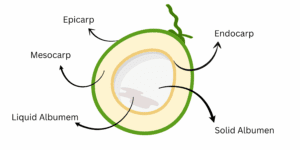
- Exocarp – the outer skin
- Mesocarp – the fleshy or fibrous middle layer
- Endocarp – a hard inner shell that encloses the seed
Common examples of drupes include peaches, cherries, olives, and mangoes. In those fruits, the edible flesh surrounds a hard pit. Coconuts follow the same basic structure — just on a much larger, tougher scale.
In coconuts:
- The exocarp is the smooth outer skin
- The mesocarp is the thick, fibrous husk
- The endocarp is the hard shell protecting the seed
- Inside the shell are the seed, coconut water, and coconut meat
Because coconuts have a fibrous mesocarp rather than a soft, fleshy one, they are often described more specifically as fibrous drupes.
This structure explains why coconuts are so resilient and why they can survive long ocean journeys — a trait that helped coconut palms spread across tropical regions worldwide.
Why Coconuts Are Often Mistaken for Nuts
Despite being fruit, coconuts are commonly grouped with nuts in everyday language. There are several reasons for this.
First, coconuts have a hard shell, which people instinctively associate with nuts like walnuts or hazelnuts. Second, the word “nut” is embedded directly in the name. Third, coconuts are often used in similar culinary contexts as nuts — toasted, shaved, or added to desserts.
However, true nuts are botanically distinct. A true nut, such as an acorn or chestnut, is a dry fruit with a single seed where the seed is not fused to the fruit wall. Coconuts do not fit this definition.
Coconut vs Nuts vs Common Fruits
| Category | Coconut | True Nuts | Common Fruits |
| Botanical type | Drupe (fruit) | Nut | Fruit |
| Hard shell | Yes | Yes | No |
| Fleshy interior | Yes | No | Yes |
| Develops from flower | Yes | Yes | Yes |
| Contains seed | Yes | Yes | Yes |
This distinction also explains why coconuts are generally safe for people with tree nut allergies — though individual medical advice should always be followed.
Coconut from a Culinary Perspective
While botany classifies coconuts as fruit, culinary language plays by different rules.
In cooking and food culture, ingredients are often grouped based on flavor, texture, and usage rather than plant biology. From this perspective, coconuts occupy a category of their own.
Coconut meat can be sweet or savory. Coconut water is consumed as a beverage. Coconut milk and cream are used in soups, curries, desserts, and drinks. Coconut oil behaves more like a fat than a fruit extract.
Because coconuts don’t behave like typical fruits in the kitchen, they’re often treated as a separate ingredient entirely. This practical classification makes sense in cooking, even if it doesn’t align with scientific definitions.
Culinary usage answers the question “how do we use coconut?”
Botanical classification answers the question “what is coconut?”
Both perspectives can be correct at the same time.
Coconut from a Nutritional Perspective
Nutritionally, coconuts also stand apart from most fruits. Many fruits are high in simple sugars and water, while coconut meat is higher in fat and fiber. Coconut water, on the other hand, is low in fat and valued for hydration and electrolytes.
This split is another reason coconuts confuse people. Coconut water behaves like a light fruit juice, while coconut meat behaves more like a calorie-dense food.
From a nutritional standpoint:
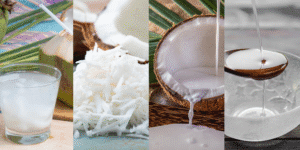
- Coconut water is hydrating and low in calories
- Coconut meat is rich, filling, and energy-dense
- Coconut oil functions as a fat rather than a fruit-derived sugar source
These differences highlight how coconut can be both a fruit and something entirely unique at the same time.
How Coconut Classification Influences How We Use It
Understanding coconuts as fruit — and more specifically as drupes — helps explain their remarkable versatility.
Their layered structure protects freshness, allows long storage, and supports both hydration and nourishment. The hard shell preserves the interior, while the water and meat remain sealed until opened.
This is also why coconuts work so well in settings that value both function and presentation. The fruit’s natural design lends itself to serving, display, and experience in a way few other fruits can match.
Whether enjoyed simply or presented in more refined formats, coconut’s structure plays a direct role in how it’s experienced.
Conclusion — So, Are Coconuts Fruit?
Yes — coconuts are fruit, botanically classified as fibrous drupes. They develop from the flower of the coconut palm, contain a seed, and serve the same biological purpose as other fruits, even if they look and behave differently.
The confusion around coconuts comes from their name, their hard shell, and their unique culinary and nutritional roles. But once you understand their structure, coconuts make perfect sense — not as an exception, but as one of the most fascinating examples of what fruit can be.
This understanding also sheds light on why coconuts adapt so well to so many uses, from everyday hydration to visually elevated experiences. In environments where presentation matters — including moments when custom-branded coconuts are used to enhance identity or atmosphere — the coconut’s natural form, durability, and versatility make it a standout fruit in every sense of the word.
FAQs — Are Coconuts Fruit?
-
Are coconuts fruit or nuts?
Botanically, coconuts are fruit, not true nuts.
-
What type of fruit is a coconut?
Coconuts are classified as drupes, specifically fibrous drupes.
-
Why are coconuts called nuts if they aren’t nuts?
The name comes from appearance and tradition, not botanical accuracy.
-
Is coconut water considered fruit juice?
Coconut water is naturally occurring liquid inside the fruit, not juice made from pressing fruit flesh.
-
Are coconuts safe for people with nut allergies?
Coconuts are generally considered safe for people with tree nut allergies, but medical advice should always be followed.
-
How are coconuts different from other fruits?
Their layered structure, high fat content, and durability set them apart from most fruits.

