
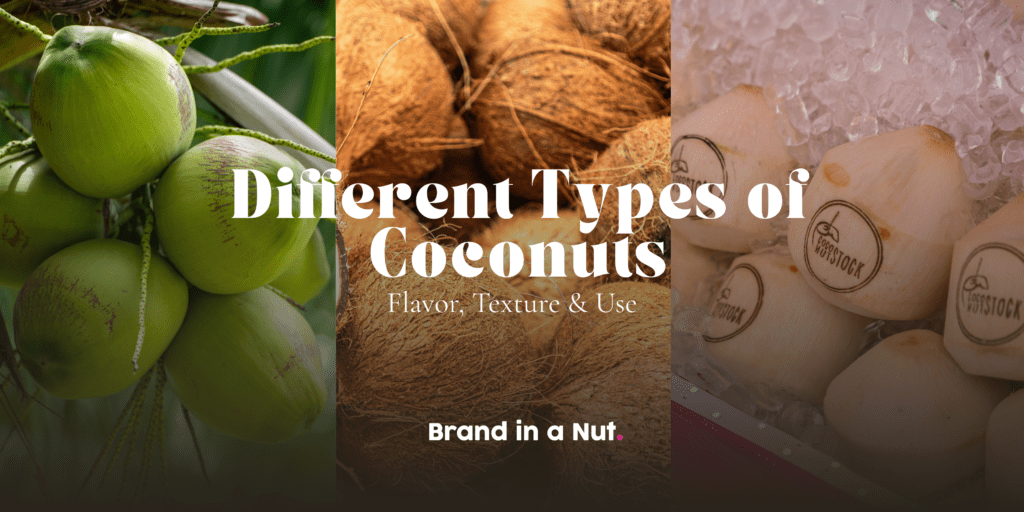
Coconuts are often treated as if they are all the same — one fruit, one flavor, one purpose. In reality, coconuts vary significantly depending on their age, structure, preparation, and intended use. A coconut meant for hydration delivers a completely different experience than one intended for cooking. A freshly opened young coconut feels entirely different from a mature brown one. Even a presentation can shape how coconut is perceived.
Understanding the different types of coconuts allows you to appreciate not just the fruit itself, but the role it plays in flavor, texture, refreshment, and experience. From light and hydrating to rich and dense, coconut offers a surprisingly wide spectrum.
This guide explores the different types of coconuts through the lens of flavor, texture, and use — helping you understand why not all coconuts are the same and how choosing the right one changes everything.
Key Takeaways
- Coconut types differ primarily by age and structure
- Young coconuts are light, hydrating, and subtly sweet
- Mature coconuts are richer, firmer, and more concentrated
- Texture significantly shapes perceived flavor
- Preparation form alters sweetness and intensity
- Presentation can enhance the overall coconut experience
- Choosing the right coconut depends on how it will be used
How Coconuts Are Classified: Understanding Age and Structure
The most important distinction between coconut types is maturity.
All coconuts begin as young green fruits. As they mature, their structure changes. The water content gradually decreases, and the soft interior flesh thickens and firms. Eventually, the green exterior turns brown and fibrous, signaling a mature coconut.
These structural changes influence:
- Water volume
- Meat thickness
- Texture
- Flavor concentration
- Mouthfeel
A young coconut is primarily a water-based fruit. A mature coconut is meat-dominant. That shift alone transforms how coconut tastes and how it is used.
The coconut’s layered structure — outer skin, fibrous husk, hard shell, and interior seed — remains the same, but its internal composition evolves dramatically as it matures.
Understanding this progression is key to understanding coconut variety.
Young Green Coconuts — Light, Fresh, and Hydrating
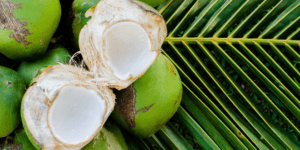
Young green coconuts are harvested before full maturity. At this stage, they contain a high volume of coconut water and soft, jelly-like meat.
Flavor Profile
Young coconuts taste:
- Light and clean
- Mildly sweet
- Refreshing rather than rich
- Neutral with subtle tropical notes
The sweetness is natural and delicate — never heavy or syrupy. Unlike many fruits, coconut’s sweetness feels balanced and smooth.
Texture
The interior meat is soft, almost custard-like. It’s delicate and spoonable, with a texture that enhances the feeling of freshness.
The water is clear, crisp, and refreshing. When served chilled, it becomes even more vibrant and hydrating.
Use
Young coconuts are best suited for:
- Fresh drinking
- Hydration-focused environments
- Light refreshment
- Wellness settings
- Warm climates
Young coconuts are not designed for cooking richness — they are about refreshment and clarity.
Mature vs Young Coconuts
| Feature | Young Coconut | Mature Coconut |
| Water Content | High | Lower |
| Meat Texture | Soft, jelly-like | Firm, thick |
| Flavor | Light, mildly sweet | Richer, nuttier |
| Best Use | Drinking fresh | Cooking, milk, oil |
| Mouthfeel | Crisp & refreshing | Dense & filling |
This contrast defines the foundation of coconut variation.
Mature Brown Coconuts — Richer and More Textured
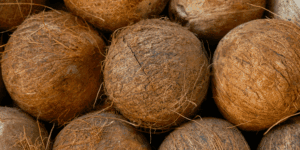
As coconuts mature, their water content decreases and the interior flesh thickens.
Flavor Profile
Mature coconuts taste:
- Slightly nuttier
- More concentrated
- Less refreshing, more substantial
- Mildly sweet but deeper
The flavor remains subtle, but it carries more weight. It feels fuller and more grounded.
Texture
The meat becomes:
- Firm
- Dense
- Structured
- Slightly chewy
This firmness makes mature coconuts ideal for grating, shredding, or blending.
Use
Mature coconuts are commonly used for:
- Coconut milk
- Coconut cream
- Baking
- Cooking
- Coconut oil
- Shredded coconut
They are less about hydration and more about richness and structure.
Diamond-Shaped Young Coconuts — Elevated Freshness & Presentation

Diamond-shaped coconuts begin as young green coconuts. The difference lies in their preparation.
These coconuts are carefully shaved into clean, geometric shapes, removing the rough outer husk while preserving the integrity of the fruit inside.
What Changes?
Internally, nothing changes. The flavor remains:
- Light
- Clean
- Mildly sweet
- Refreshing
The texture remains soft and hydrating.
What changes is perception.
The shaved surface:
- Highlights freshness visually
- Creates clean, defined edges
- Enhances brightness
- Signals refinement
Presentation plays a powerful role in how flavor is experienced. A clean, geometric coconut appears fresher and more intentional — which subtly elevates the tasting experience.
Diamond-shaped young coconuts maintain the same hydration and texture, but their structured form enhances their visual impact and overall impression.
How Coconut Taste Changes by Form
Beyond maturity, coconut flavor shifts depending on preparation.
Fresh Coconut Water
- Clean
- Crisp
- Very lightly sweet
- Refreshing
Fresh coconut water is subtle. It doesn’t overpower. It hydrates.
Young Coconut Meat
- Delicate
- Mild
- Soft
- Slightly sweet
Its texture enhances its sweetness perception.
Mature Coconut Meat
- Richer
- Nuttier
- Firmer
- More filling
Coconut Milk
- Creamy
- Rounded
- Fuller flavor
- Higher perceived sweetness
Fat carries flavor, so milk tastes richer than fresh meat.
Dried Coconut
- Concentrated sweetness
- Chewy or crisp
- More intense
Drying removes moisture, concentrating sugars.
Coconut Flavor & Texture by Form
| Coconut Form | Flavor Profile | Sweetness Level | Texture | Common Use |
| Fresh young water | Clean, crisp | Very mild | Liquid | Hydration |
| Young coconut meat | Light, delicate | Mild | Jelly-soft | Fresh eating |
| Mature coconut meat | Richer, nutty | Mild | Firm | Cooking |
| Coconut milk | Creamy, rounded | Medium | Smooth | Sauces |
| Dried coconut | Concentrated, sweet | High | Chewy/crisp | Desserts |
Each form reshapes coconut’s character.
How Texture Shapes Coconut Experience
Flavor is not just about taste — it is about mouthfeel.
Soft textures often feel sweeter. Firm textures feel richer. Cold temperatures enhance crispness. Room temperature softens perception.
Young coconut water served chilled tastes brighter and more refreshing. Mature coconut meat feels denser and more filling.
Texture influences:
- Perceived sweetness
- Refreshment level
- Heaviness vs lightness
- Overall enjoyment
Visual texture matters too. Smooth, shaved coconut surfaces reinforce freshness perception. Clean edges and defined structure enhance the experience even before the first sip.
Choosing the Right Coconut for the Right Use
Different uses require different coconut types.
For Hydration
Choose young green coconuts. High water content and mild sweetness make them ideal.
For Cooking
Choose mature brown coconuts. Their firm meat produces richer milk and cream.
For Desserts
Mature or dried coconut offers concentrated flavor.
For Visual & Experiential Settings
Diamond-shaped young coconuts combine hydration with elevated presentation.
For Cocktails
Fresh young coconuts provide light sweetness and natural balance.
Matching coconut type to purpose enhances the outcome every time.
Conclusion — Understanding Coconut Types Enhances the Experience
Coconuts are not one-dimensional. They evolve with age, shift with preparation, and express themselves differently through texture and presentation.
Young coconuts offer clarity and refreshment. Mature coconuts offer structure and richness. Diamond-shaped young coconuts elevate the same fresh interior with refined visual presence. Each type carries its own sensory identity.
Understanding these differences allows coconut to be used intentionally — whether for hydration, cooking, or immersive experiences.
And in environments where presentation becomes part of the story — including moments where custom-branded coconuts are used to merge freshness with visual identity — selecting the right coconut type ensures that flavor, texture, and impression align seamlessly.
Coconut’s diversity is what makes it remarkable.
FAQs — Different Types of Coconuts
- What are the main types of coconuts?
Young green coconuts and mature brown coconuts are the primary categories.
- What is the difference between young and mature coconuts?
Young coconuts have more water and soft meat. Mature coconuts have thicker meat and less water.
- Which coconut is best for drinking?
Young green coconuts are best for fresh drinking.
- What type of coconut is used for coconut milk?
Mature brown coconuts are typically used for milk and cream.
- Are diamond-shaped coconuts different inside?
No. They are young coconuts shaved into a refined shape.
- Why do some coconuts taste sweeter than others?
Sweetness depends on maturity, freshness, and moisture content.
- Does coconut texture affect flavor perception?
Yes. Softer textures often feel sweeter, while firmer textures feel richer.

