
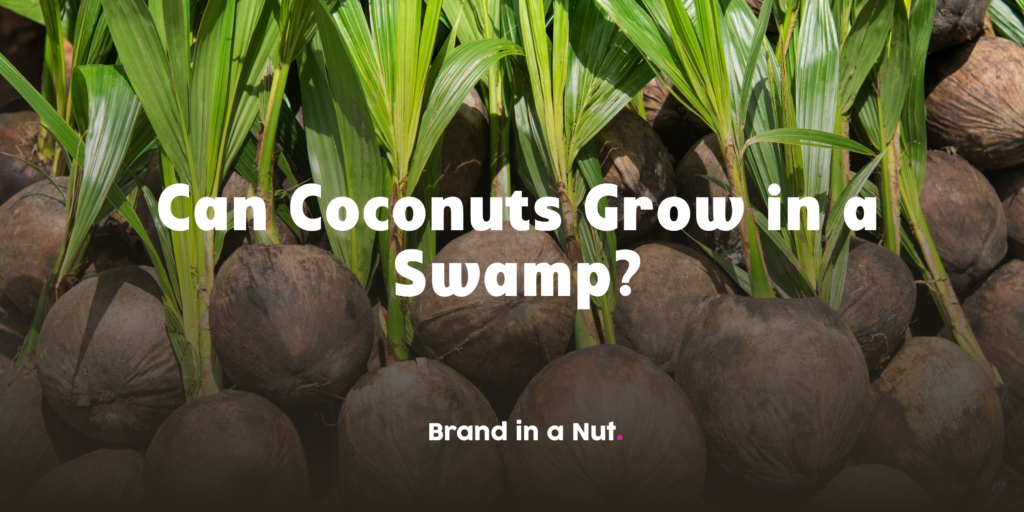
Short answer: not really. Coconut palms can tolerate brief flooding, but they cannot thrive long term in a true swamp. Constant standing water suffocates the roots, and over time the tree weakens, stops producing coconuts, or dies. Coconuts grow best in loose, sandy, well-draining soil near the coast, not in permanently waterlogged ground. If you’re wondering whether coconuts grow in a swamp the way mangroves or cypress trees do, the answer leans firmly toward no, even though coconut palms are famously tough and salt tolerant.
That said, the question isn’t as simple as a flat yes or no. Some coastal areas look swampy but drain well underneath, and coconut palms handle that just fine. This guide breaks down exactly why coconuts grow in a swamp only under very specific conditions, what damage waterlogging actually causes, and what real growing conditions look like for a healthy coconut palm.
Key Takeaways
- Coconuts grow in a swamp only when the soil drains within hours, not days, after flooding.
- Standing water for extended periods causes root rot, which is the leading cause of coconut palm death.
- Coconut palms prefer sandy, well-aerated soil, ideally within a few miles of a coastline.
- Farmers manage borderline swampy land with raised beds, drainage channels, and careful site selection.
Can Coconuts Grow in a Swamp? Understanding the Basics
Coconut palms are often mistaken for swamp-loving trees because they grow so close to water, but that assumption misses an important detail. Coconuts grow near oceans and rivers because sandy coastal soil drains fast, not because the roots enjoy sitting in water. A swamp, by definition, holds water for long stretches with little to no drainage. That environment is close to the opposite of what a coconut palm’s root system needs to breathe and take up nutrients properly.
The confusion also comes from the fact that coconut palms tolerate short-term flooding far better than most fruit trees. After a storm surge or heavy rain, a coconut palm can sit in a few inches of water for a day or two without major damage. This resilience makes people assume coconuts grow in a swamp environment just fine. In reality, the tree is surviving temporary stress, not thriving in permanent wetness, and repeated flooding events add up over time.
The real dividing line is drainage speed. If water moves through the soil and away from the root zone within a matter of hours, coconut palms can handle it. If water sits for days or weeks, as it does in a genuine swamp, oxygen in the soil drops sharply and roots begin to suffocate. So while coconuts grow in a swamp for a short window without lasting harm, permanent swamp conditions are a different story entirely and eventually take a toll on the tree’s health and fruit production.
| Soil Factor | Ideal Coconut Soil | True Swamp Soil |
| Drainage | Fast, water clears in hours | Very slow, water sits for days |
| Oxygen Level | High, roots breathe freely | Low, roots become oxygen starved |
| Salinity Tolerance | Handles salt spray and brackish water | Often too acidic or stagnant |
| Texture | Loose, sandy, loamy | Dense, muddy, compacted |
What Happens to Coconut Palms in Waterlogged Soil
When a coconut palm sits in waterlogged soil for an extended period, the first system to suffer is the root network. Roots need oxygen just as much as leaves need sunlight, and standing water pushes air pockets out of the soil. Without oxygen, roots cannot absorb water and nutrients efficiently, even though they are surrounded by moisture. This is the central reason coconuts grow in a swamp poorly over the long run, even though the environment looks water rich on the surface.
Root rot is the most common consequence, and it tends to develop quietly before visible symptoms appear above ground. Fungal pathogens thrive in low oxygen, high moisture conditions, attacking the root tissue and slowly cutting off the tree’s ability to feed itself. By the time fronds start yellowing or drooping, the root damage is often already significant. This delay is part of why growers sometimes underestimate how much swamp-like conditions are hurting a coconut palm until recovery becomes difficult.
Beyond root rot, chronic waterlogging weakens the trunk’s structural stability. Coconut palms rely on a wide, shallow root system for anchorage rather than a single deep taproot. When that root system is compromised by constant wetness, the tree becomes more vulnerable to leaning or toppling during storms and high winds. This is another reason coconuts grow in a swamp environment with real risk attached, since both nutrition and physical stability decline together as the soil stays saturated.
Common signs a coconut palm is struggling with excess water include:
- Yellowing or browning fronds starting from the lower canopy
- Slowed or stunted new growth compared to healthy palms nearby
- A sour, rotten smell near the base of the trunk
- Visible leaning or a loosening feel at the root collar
Ideal Growing Conditions for a Healthy Coconut Palm
Coconut palms evolved along tropical coastlines, and their ideal growing conditions reflect that origin closely. They want full sun, consistent warmth, and soil that drains quickly even after heavy tropical rain. Sandy or sandy loam soil is the gold standard because it lets water pass through while still holding enough moisture for the roots to access. This is the opposite of the dense, slow-draining ground found in most swamps, which is exactly why coconuts grow in a swamp so inconsistently compared to a proper beach or coastal plain.
Temperature and humidity also play a major role. Coconut palms need consistently warm temperatures, generally staying above 64°F even in cooler months, along with high humidity and regular rainfall. They are remarkably tolerant of salt spray and brackish groundwater, which is part of why they’re associated with tropical wetlands in the first place. But tolerance for salt is not the same as tolerance for stagnant water, and that distinction matters when evaluating whether a specific plot of land can actually support healthy coconut production.
Soil pH and nutrient balance round out the picture. Coconut palms prefer slightly acidic to neutral soil, generally in the 5.0 to 8.0 range, with good access to potassium, magnesium, and boron. Swampy soil often skews more acidic and lacks the aeration needed for nutrient uptake, even when the raw nutrients are technically present. This is another layer of why coconuts grow in a swamp poorly on a nutritional level, not just a drainage level, since the roots simply cannot process what they can’t properly reach.
| Growing Factor | Ideal Range or Condition |
| Soil Type | Sandy or sandy loam, well-draining |
| Soil pH | 5.0 to 8.0, slightly acidic to neutral |
| Sunlight | Full sun, 6+ hours daily |
| Temperature | Consistently above 64°F |
| Rainfall | 60 to 100 inches annually, well-drained |
How Farmers and Growers Manage Wet or Swampy Land
Despite the challenges, coconut farmers in tropical regions often work with land that borders wetlands, deltas, or low-lying coastal plains. Rather than accepting that coconuts grow in a swamp as-is, experienced growers modify the land to create better drainage before planting. One of the most common techniques is building raised planting mounds, which lift the root ball above the average water table and give roots a chance to establish in aerated soil even when the surrounding land stays damp.
Drainage channels and canals are another widely used solution, particularly in regions like parts of Southeast Asia and the Caribbean where coconut plantations sit near river deltas. These channels actively pull excess water away from the root zone during heavy rain seasons, effectively converting marginal swamp-adjacent land into workable coconut ground. This engineering approach is a major reason coconuts grow in a swamp-adjacent area successfully in commercial farming, even though the same trees would fail in an unmanaged wetland just a short distance away.
Site selection remains the first and most important decision, though. Growers assess drainage patterns, water table depth, and soil composition before ever planting a coconut palm, often testing how quickly a test hole drains after rainfall. Land that holds water for more than a day or two is generally avoided or heavily modified first. This careful groundwork explains why healthy coconut groves near wetlands are the result of deliberate land management, not proof that coconuts grow in a swamp naturally without any intervention.
| Drainage Method | How It Works | Best Suited For |
| Raised Mounds | Lifts roots above the water table | Low-lying coastal plots |
| Drainage Canals | Channels excess water away from roots | Delta and river-adjacent farms |
| Soil Amendment | Adds sand to improve porosity | Dense, clay-heavy ground |
Conclusion
So can coconuts grow in a swamp? Only in a limited, short-term sense, and never as a long-term thriving environment. Coconut palms need drainage, oxygen, and sandy coastal soil to truly flourish, which is a very different picture from a standing-water swamp. Understanding this distinction matters whether you’re planting your own palm, researching where your coconuts actually come from, or just curious about the tree behind your favorite tropical drink. At Coconut Stock, every coconut we serve comes from properly grown, well-drained tropical sources, which is part of why the water and meat inside taste fresh and clean rather than off or overly earthy.
FAQs
-
Can coconuts grow in a swamp long term?
Not reliably. Coconut palms can handle brief flooding, but permanent swamp conditions lead to root rot and declining health over time.
-
Why do coconut palms grow near water if they don’t like swamps?
They grow near coastlines because sandy soil there drains quickly, not because they prefer standing water.
-
What soil is best for coconut palms?
Sandy or sandy loam soil that drains fast is ideal, ideally with a slightly acidic to neutral pH.
-
How do farmers grow coconuts on wet, low-lying land?
They use raised mounds, drainage canals, and soil amendments to keep the root zone aerated despite nearby wetlands.What are signs a coconut palm has too much water?
Yellowing fronds, stunted growth, a foul smell near the trunk base, and leaning are all common warning signs.
-
Are coconut palms salt tolerant?
Yes, they tolerate salt spray and brackish water well, but that tolerance does not extend to constant standing water.

