
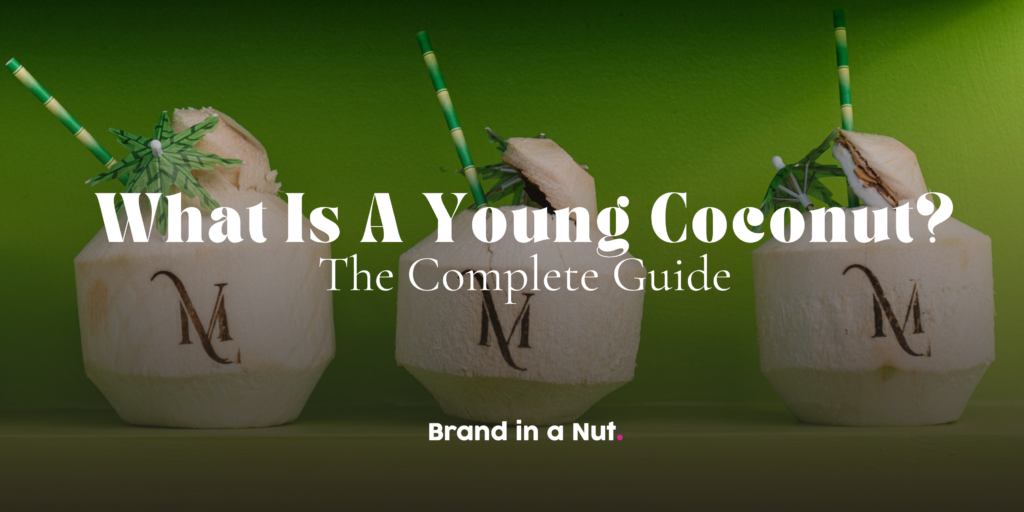
If someone asked you to picture a coconut, you would probably think of the small, brown, hairy ball you see at the grocery store. But that is a mature coconut, and it is a completely different product from what is actually taking over the wellness, hospitality, and food industries right now. A young coconut is a coconut harvested early in its life cycle, typically between six and nine months, when the water inside is at its sweetest and the meat is soft, creamy, and full of nutrients. It looks nothing like the brown one. It tastes nothing like the brown one. And once you try one, you understand why the world is choosing it over everything else.
Understanding what a young coconut is matters because it changes the way you think about coconut water, coconut meat, and how coconuts are used in food, drinks, events, and everyday health. This guide covers everything you need to know about what a young coconut is: what it looks like, where it comes from, how it tastes, its nutritional benefits, how to open it, how to eat it, and how it is being used across industries today. Whether you are a health-conscious consumer, an event planner, a hospitality professional, or simply curious, this is the only guide you need.
Key Takeaways
- A young coconut is a coconut harvested between 6 and 9 months, before the shell hardens and the meat turns dense.
- They have a white, diamond-shaped outer shell and contain naturally sweet water and soft, jelly-like meat.
- Young coconuts are the preferred variety for fresh coconut water because of their superior taste and nutrition.
- The most common variety is the young Thai coconut, sourced primarily from Thailand.
What Is a Young Coconut?
A young coconut is a coconut that has been harvested early, typically between six and nine months after the flower is pollinated. At this stage of growth, the coconut is still developing. The outer shell beneath the husk is relatively soft, the water inside is abundant and naturally sweet, and the young meat lining the inner wall is thin, translucent, and gel-like. This is the opposite of a mature coconut, which is harvested at twelve months or later when the shell has hardened completely, the water has decreased, and the meat has become thick, dense, and fibrous. The timing of the harvest is what defines a young coconut and what makes it so different in every way.
What makes a young coconut special is the balance between its water and its meat at this specific stage of development. The water has not yet been absorbed into the growing meat, so there is more of it and it is sweeter. The meat has not yet hardened, so it is soft enough to scoop with a spoon and eat immediately. This combination of sweet water and tender meat is why young coconuts have become the preferred choice for fresh consumption, smoothies, desserts, and direct drinking. A mature coconut is better suited for oil extraction, coconut milk production, and cooking where the harder meat is needed.
The distinction between a young coconut and a mature coconut is not just about age. It affects taste, texture, nutrition, appearance, and how the coconut is used. When people talk about fresh coconut water, they are almost always referring to the water from a young coconut. When restaurants serve a whole coconut with a straw, that is a young coconut. When hotels brand a coconut with their logo and serve it poolside, that is a young coconut. Understanding what a young coconut is helps you understand why it has become such a valuable product across multiple industries.
What Does a Young Coconut Look Like?
A young coconut looks nothing like the brown, hairy coconut most people are familiar with. The most common variety you will encounter is the young Thai coconut, which has had its green outer husk trimmed and shaped into a distinctive white, diamond-shaped form. This diamond shape is not natural. It is the result of the husk being cut away with a machete or machine, leaving the smooth white inner shell exposed. The pointed top and flat bottom make it easy to handle, serve, and display, which is one of the reasons young Thai coconuts have become so popular in hospitality and events.
If you see a young coconut that still has its green husk intact, it will look like a large, smooth, green oval. These are common in tropical countries where coconuts are sold fresh from the tree. The green husk is thick and protective, and the coconut inside is the same young coconut with sweet water and soft meat. The difference is purely cosmetic and practical. The trimmed, white diamond-shaped version is easier to ship, store, brand, and serve, which is why it dominates in markets outside of the tropics.
Here is a side-by-side comparison to help you understand what a young coconut looks like versus a mature coconut:
| Feature | Young Coconut | Mature Coconut |
| Outer Appearance | White, diamond-shaped (trimmed) or green (with husk) | Brown, round, hairy |
| Shell Hardness | Soft to semi-hard | Very hard |
| Water Amount | High (10 to 14 ounces) | Low (2 to 4 ounces) |
| Water Taste | Sweet, light, refreshing | Mild, slightly sour |
| Meat Texture | Soft, jelly-like, thin | Thick, hard, fibrous |
| Meat Taste | Mild, creamy, slightly sweet | Rich, oily, dense |
| Harvest Age | 6 to 9 months | 12+ months |
This table makes it clear that a young coconut and a mature coconut are essentially two different products from the same fruit at different stages of life.
Where Do Young Coconuts Come From?
Young coconuts are grown across tropical regions worldwide, but the highest quality young coconuts come from Southeast Asia. Thailand is widely considered the gold standard for young coconut production. The country’s tropical climate, rich volcanic soil, and generations of farming expertise produce coconuts with consistently sweet water and tender meat that other regions struggle to match. The Philippines, Indonesia, Sri Lanka, and parts of Central America also produce young coconuts, but Thai coconuts remain the most sought-after variety in international markets.
The journey of a young coconut from farm to consumer involves careful timing and handling. Farmers monitor the coconuts closely and harvest them at exactly the right window, typically between six and nine months, when the water-to-meat ratio is ideal. Harvesting too early means less water and underdeveloped meat. Harvesting too late means the meat starts hardening and the water loses its sweetness. After harvesting, the green outer husk is trimmed into the signature diamond shape, and the coconuts are cleaned, sorted, and prepared for refrigerated shipping to maintain freshness during transit.
The sourcing of young coconuts matters because it directly affects quality. Coconuts grown in nutrient-rich Thai soil tend to have sweeter water, more consistent size, and better shelf life than coconuts from other regions. This is why premium suppliers source exclusively from Thailand. The climate and agricultural practices in Thailand have been refined over centuries specifically for coconut production, making Thai young coconuts the benchmark for quality in every market they enter.
What Does a Young Coconut Taste Like?
The water inside a young coconut is unlike any other natural beverage. It is naturally sweet without being sugary, light without being watery, and has a subtle nutty undertone that is completely unique to fresh coconut water. The sweetness comes from natural sugars that are present in higher concentrations during the young stage of the coconut’s development. As the coconut matures, these sugars are gradually absorbed into the growing meat, which is why mature coconut water tastes flatter and sometimes slightly sour by comparison.
The meat of a young coconut has a soft, creamy, almost custard-like texture that melts in your mouth. It is nothing like the hard, crunchy meat of a mature coconut that requires grating or chopping. Young coconut meat can be scooped out with a spoon and eaten immediately, added to smoothies for natural creaminess, or used as a base for dairy-free desserts. The flavor is mild and slightly sweet, allowing it to pair well with virtually any fruit, spice, or ingredient without overpowering the dish.
One important distinction is the difference between fresh young coconut water and packaged coconut water from the store. Packaged coconut water has been pasteurized, which extends shelf life but alters the taste and reduces some of the natural enzymes and nutrients. Fresh young coconut water has none of that processing. What you taste is exactly what the coconut produced, with nothing added and nothing removed. This is why anyone who tries fresh young coconut water for the first time immediately notices how different it is from the bottled version.
Young Coconut Nutrition and Health Benefits
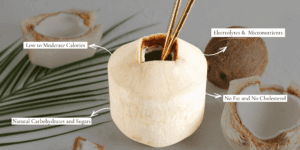
Understanding the nutritional profile of a young coconut helps explain why it has become a staple in health and wellness circles. A single young coconut provides roughly 10 to 14 ounces of water that is naturally rich in electrolytes, potassium, magnesium, and natural enzymes. The water is low in calories, contains no added sugars, and provides hydration that rivals or exceeds most commercial sports drinks without any of the artificial ingredients.
The meat of a young coconut adds healthy fats, dietary fiber, and medium-chain triglycerides to the nutritional picture. MCTs are a type of fat that the body converts quickly into usable energy rather than storing as body fat, making young coconut meat a smart choice for sustained energy. The fiber supports digestive health and promotes a healthy gut microbiome. Combined with the hydrating properties of the water, a young coconut delivers a complete nutritional package from a single, unprocessed source.
Here is how young coconut water compares to common hydration alternatives:
| Feature | Young Coconut Water | Sports Drinks | Plain Water |
| Calories (per 8 oz) | 45 to 60 | 50 to 80 | 0 |
| Natural Sugars | Yes, naturally occurring | Added sugars | None |
| Electrolytes | High (potassium, magnesium) | Moderate (sodium-heavy) | None |
| Artificial Ingredients | None | Colors, flavors, preservatives | None |
| Enzymes | Yes, naturally present | None | None |
| Taste | Sweet, light, refreshing | Artificial, sweet | Neutral |
This comparison shows why a young coconut is considered one of nature’s best hydration sources. It delivers electrolytes and natural energy without any of the processed ingredients found in commercial alternatives.
How to Open a Young Coconut

Opening a young coconut is simple once you know the right technique. The method we recommend is the Coco Jack and mallet technique. The Coco Jack is a circular stainless steel tool designed specifically for young coconuts. Place the young coconut on a stable surface, position the Coco Jack on top of the coconut, and tap it down firmly with a wooden mallet. A few solid taps and the Coco Jack cuts cleanly through the shell, allowing you to lift the cap right off. This method gives you a perfect, clean opening every time without the danger of a heavy knife or cleaver.
Once the cap is removed, pour the coconut water into a glass or drink it straight from the shell with a straw. To access the meat, use a large spoon or flexible spatula and run it along the inner wall of the shell. The meat of a young coconut should come away in smooth, soft pieces. If the meat is very thin and translucent, the coconut was harvested on the younger side. If it is slightly thicker and firmer, it was closer to maturity. Both are perfectly good to eat.
Here are a few tips for selecting the best young coconut before you open it:
- The coconut should feel heavy for its size, indicating plenty of water inside.
- There should be no cracks, mold, or dark spots on the shell.
- When you shake it gently, you should hear the water sloshing inside.
- The base should be firm and not soft or discolored.
Want to see the technique in action? Watch our step-by-step video here: How to Open a Young Coconut
How to Eat and Use a Young Coconut
The simplest way to enjoy a young coconut is to drink the water and scoop the meat straight from the shell. No preparation needed. The water is refreshing on its own, and the soft meat pairs perfectly with it for a complete, natural snack. Many people describe their first experience eating a fresh young coconut as one of the most satisfying things they have ever tasted. It is light, hydrating, and leaves you feeling energized without any heaviness.
Beyond eating it fresh, a young coconut is one of the most versatile ingredients in the kitchen. The water blends seamlessly into smoothies and acai bowls. The meat can be processed into vegan yogurt, coconut cream, raw desserts, and dairy-free ice cream. Chefs use young coconut meat in salads, curries, and ceviches where its soft texture adds creaminess without dairy. The empty shell itself is increasingly used as a natural cup for cocktails and signature drinks at restaurants, bars, and events.
Here is a quick reference for the most popular ways to use a young coconut:
| Use | How to Prepare | Best For |
| Drink the water | Pour or sip with a straw | Hydration, post-workout, daily health |
| Eat the meat raw | Scoop with a spoon | Snacking, topping bowls |
| Smoothies | Blend water and meat with fruits | Breakfast, meal replacement |
| Vegan yogurt | Blend meat with probiotics, chill | Dairy-free diets |
| Raw desserts | Process meat with sweetener, chill | Healthy treats, entertaining |
| Cocktail vessel | Empty the shell, pour your drink in | Bars, restaurants, events |
This versatility is why a young coconut has moved from a niche tropical fruit to a mainstream ingredient used by home cooks, chefs, bartenders, and event planners worldwide.
Young Coconuts in the Hospitality and Events Industry
One of the biggest shifts in how young coconuts are used has happened in the hospitality and events space. Hotels, resorts, restaurants, beach clubs, and bars across the world now serve fresh young coconuts as a premium guest experience. The diamond-shaped white shell is visually striking, naturally photogenic, and looks stunning in any setting from a poolside lounger to a fine dining table. Guests love them because they taste amazing and look incredible in photos.
The rise of branded young coconuts has taken this even further. Businesses now brand their logo, name, or design directly onto the coconut shell using a heated CNC-cut metal plate. The branding is permanent, clean, and professional. A young coconut with a hotel logo served poolside, a wedding monogram at a reception, or a company logo at a corporate event turns a simple drink into a marketing tool. Guests hold it, photograph it, and share it on social media without being asked.
This trend is particularly strong at events. Weddings, corporate retreats, brand activations, birthday celebrations, and festivals across Miami, Orlando, Houston, Tampa, and beyond now feature branded young coconuts as a signature detail. The young coconut’s combination of taste, visual appeal, and brandable surface makes it unlike any other beverage option available. It is both a drink and an experience.
How to Store a Young Coconut
Proper storage keeps a young coconut fresh and delicious for as long as possible. An unopened young coconut lasts up to two weeks when stored in the refrigerator. The cool temperature slows the natural aging process and keeps both the water and the meat at peak quality. Always store them upright if possible to prevent any leaking from the top where the shell is thinnest.
Once you open a young coconut, the clock starts. The water should be consumed immediately or stored in a sealed container in the refrigerator and used within three to five days. Scooped meat should be placed in an airtight container and refrigerated for the same timeframe. For longer storage, freeze the meat in a sealed bag with as much air removed as possible. Frozen young coconut meat lasts up to three months and works perfectly in smoothies and blended recipes.
Knowing when a young coconut has gone bad is straightforward. Fresh water should be clear or slightly cloudy with a mild, pleasant smell. If the water is yellow, pink, or has a sour or fermented odor, the coconut is no longer safe to consume. The meat should be white or translucent. If it has turned yellow, feels slimy, or smells off, discard it immediately. Always check the shell before purchasing as well. Cracks, soft spots, or mold on the exterior are signs that the coconut inside may already be compromised.
Conclusion
A young coconut is one of nature’s most complete, refreshing, and versatile foods. From the naturally sweet water to the soft, creamy meat, everything about a young coconut is designed to be enjoyed fresh. Whether you drink it straight from the shell, blend it into a smoothie, scoop the meat into a bowl, or serve it at a five-star hotel, it delivers an experience that no packaged product or processed alternative can match. Understanding what a young coconut is opens the door to better hydration, healthier eating, and a whole new way to think about one of the world’s oldest tropical fruits.
If you are looking for premium young Thai coconuts, whether for personal use, your restaurant, your hotel, or your next event, Coconut Stock is the trusted source. We source directly from Thailand, deliver fresh and ice cold, and offer custom branding with your logo using our precision heat-burning process. With 10+ years in business and 100+ trusted hospitality clients, we make it easy to bring the best young coconuts to wherever you are. Visit coconutstock.com or email sales@coconutstock.com to get started.
Frequently Asked Questions
-
What is the difference between a young coconut and a mature coconut?
A young coconut is harvested at 6 to 9 months with sweet water and soft meat. A mature coconut is harvested at 12+ months with less water and thick, hard meat.
-
How do you know if a coconut is young?
Look for the white, diamond-shaped shell. It should feel heavy, have no cracks, and you should hear water sloshing when you shake it.
-
Can you eat young coconut meat raw?
Yes. Young coconut meat is soft and jelly-like and can be scooped out with a spoon and eaten immediately.
-
Is young coconut water good for you?
Yes. It is naturally rich in electrolytes, potassium, and magnesium with no added sugars or preservatives.
-
How long does a young coconut last?
Up to two weeks unopened in the refrigerator. Once opened, consume the water and meat within 3 to 5 days.
-
What does a young coconut taste like?
The water is naturally sweet, light, and refreshing. The meat is soft, creamy, and mildly sweet with a custard-like texture.
-
Are young coconuts and Thai coconuts the same thing?
Young Thai coconuts are the most common variety of young coconut. They are sourced from Thailand and trimmed into the signature white diamond shape.

